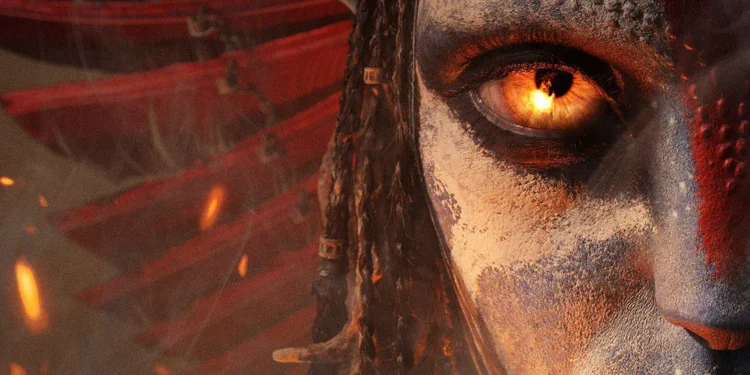
As the industry celebrated World VFX Day on December 8, the spotlight turned to the groundbreaking “Fire-Tech” and performance capture used in Avatar: Fire and Ash. We dive into the technical wizardry that allowed Wētā FX to render volcanic environments with unprecedented photorealistic accuracy.
The visual effects industry converged in London this month for World VFX Day 2025, hosted by Framestore. Amidst the panels, the “elephant in the room” was James Cameron’s Avatar: Fire and Ash. While some critics debated the narrative, the VFX community was unanimous: the film represents a “singularity” in digital environmental rendering.

Led by VFX Supervisor Richard Baneham, the teams at Wētā FX and ILM utilized a new “Sub-Surface Ash Scattering” algorithm to simulate the interaction of light, heat, and volcanic debris. Unlike previous entries, Fire and Ash relies on real-time physics engines that allow actors to see their digital environment in 360-degree high-fidelity while performing. This “Active Presence” tech eliminates the “uncanny valley” by syncing microscopic muscle twitches in the Na’vi faces with real-world thermal data from the set.


For the AVGC-XR community, the takeaway is clear: the boundary between production and post-production is dissolving. The event highlighted how these high-end tools are now trickling down to mid-sized studios via Unreal Engine 5.5 and OpenUSD, democratizing the ability to create “Avatar-level” visuals.